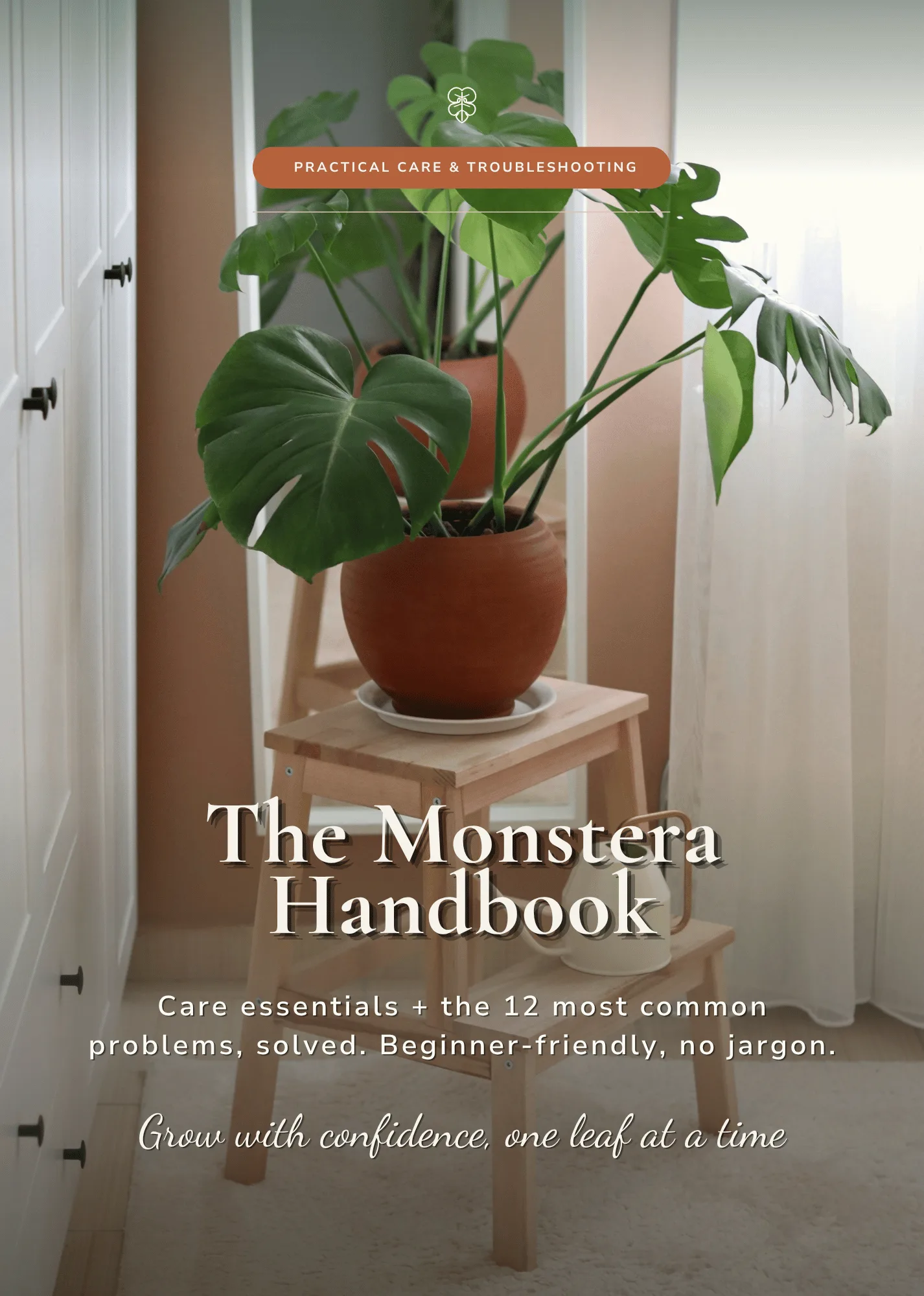
The Monstera Handbook
29 pages on the twelve problems that kill most Monsteras, and how to fix each one. Yellow leaves, brown edges, root rot, pests, stalled growth: what causes it, what to do this week, and what not to do in a panic.
The Monstera System turns yellow leaves, mushy stems and missing splits into one clear next step.
More than 600 plant lovers already read The Monstera Handbook


More than 600 plant lovers already read The Monstera Handbook
"I finally stopped over watering and learned how to repot my Monstera."
"It provided all the information I needed to protect and manage my plants!!!"
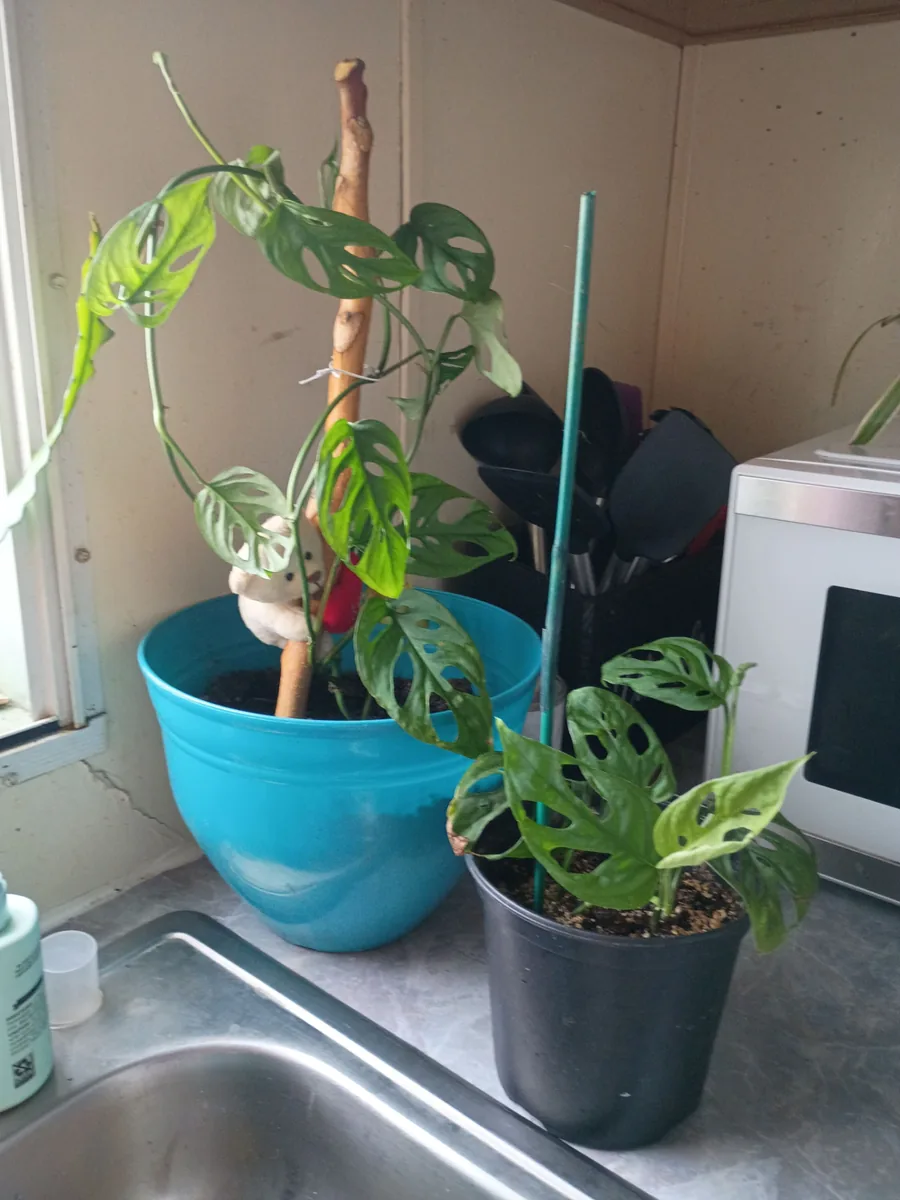
"I'm not overwatering it, but the leaves will look yellow one day then healthy the next."
Dee Ann's is exactly the kind of mystery the Symptom Decoder was made for: yellow one day, fine the next, and no idea which one to believe.
Instant download · 30-day money-back guarantee
You search the symptom and get ten answers that contradict each other. One says water more, one says water less, one says move her, one says never move her. So you try a bit of everything, and quietly feel guilty when nothing improves.

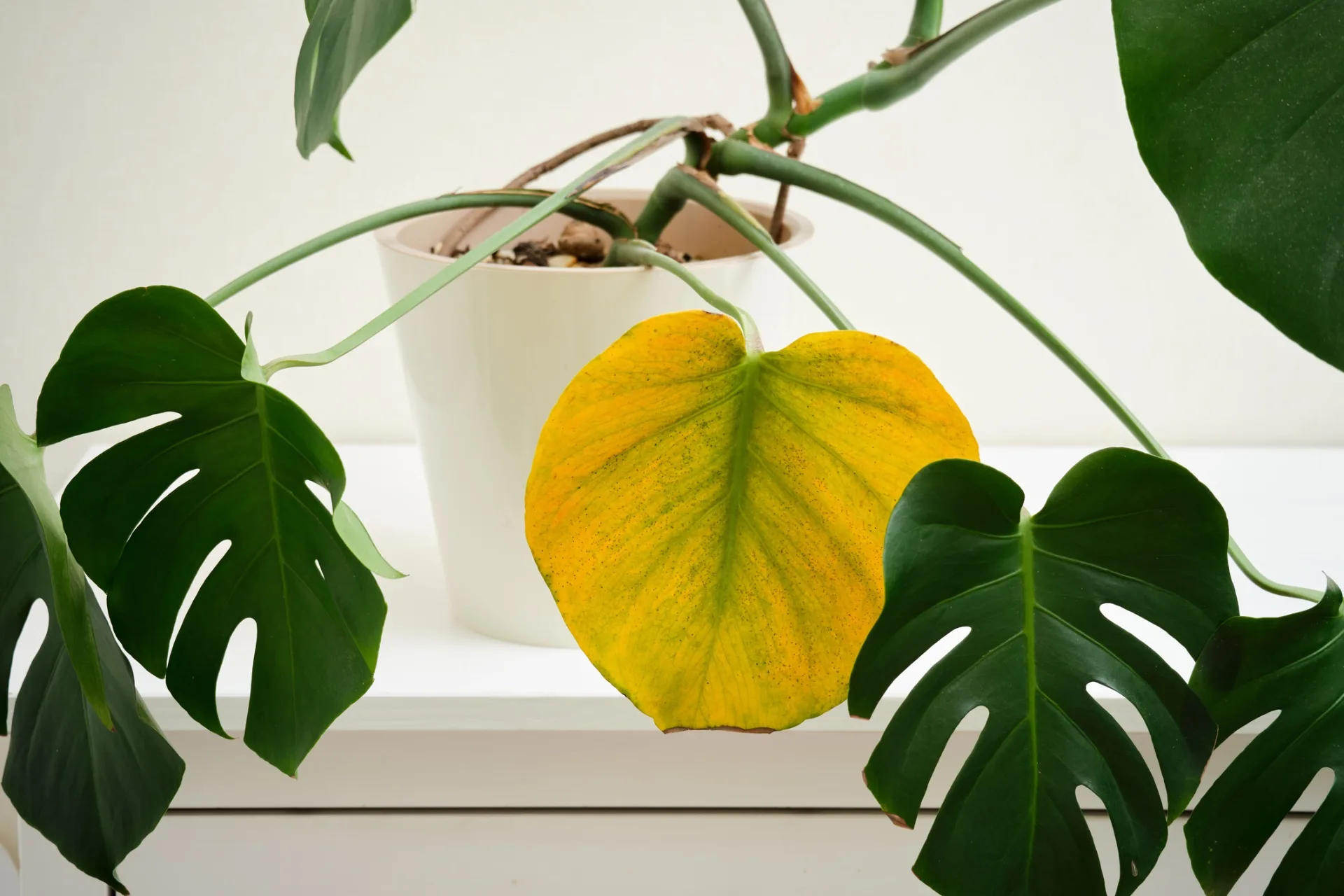
Too much water? Too little? The wrong spot? You water, and you hope.
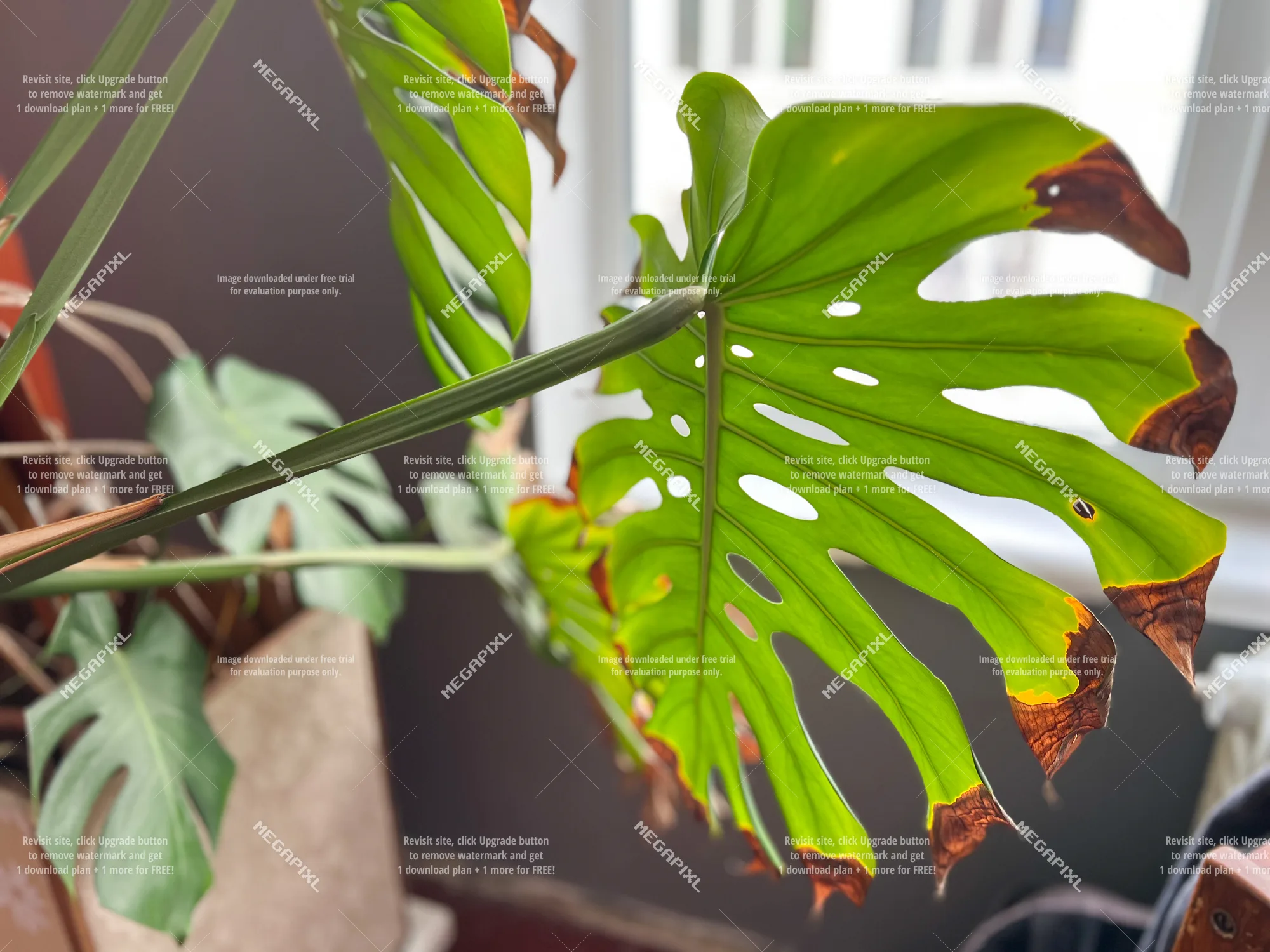
You've read it's humidity. And also sun. And also tap water. Which one is it in your home?
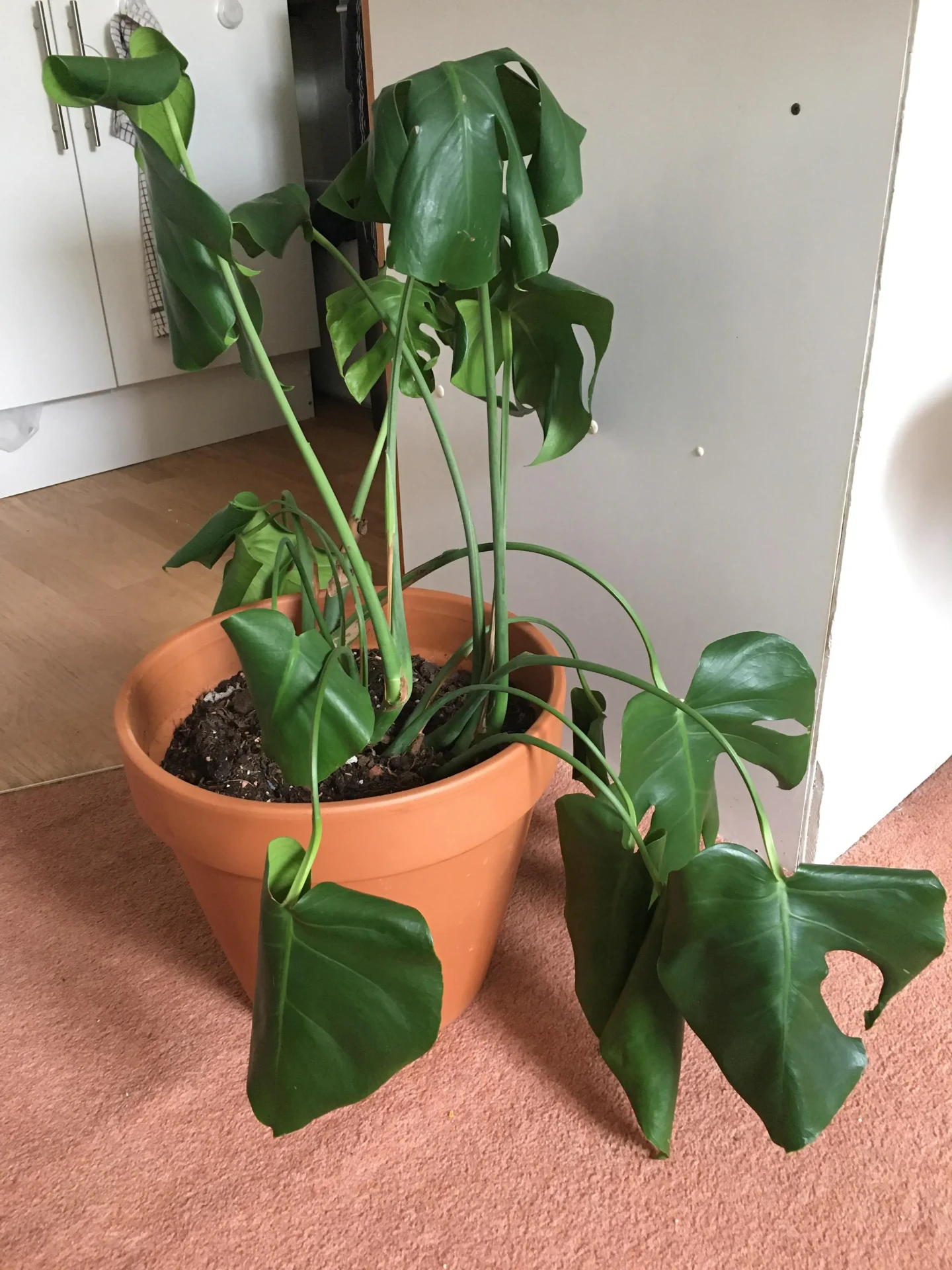
Yesterday she stood tall. This morning she's leaning, and you have no idea what changed.
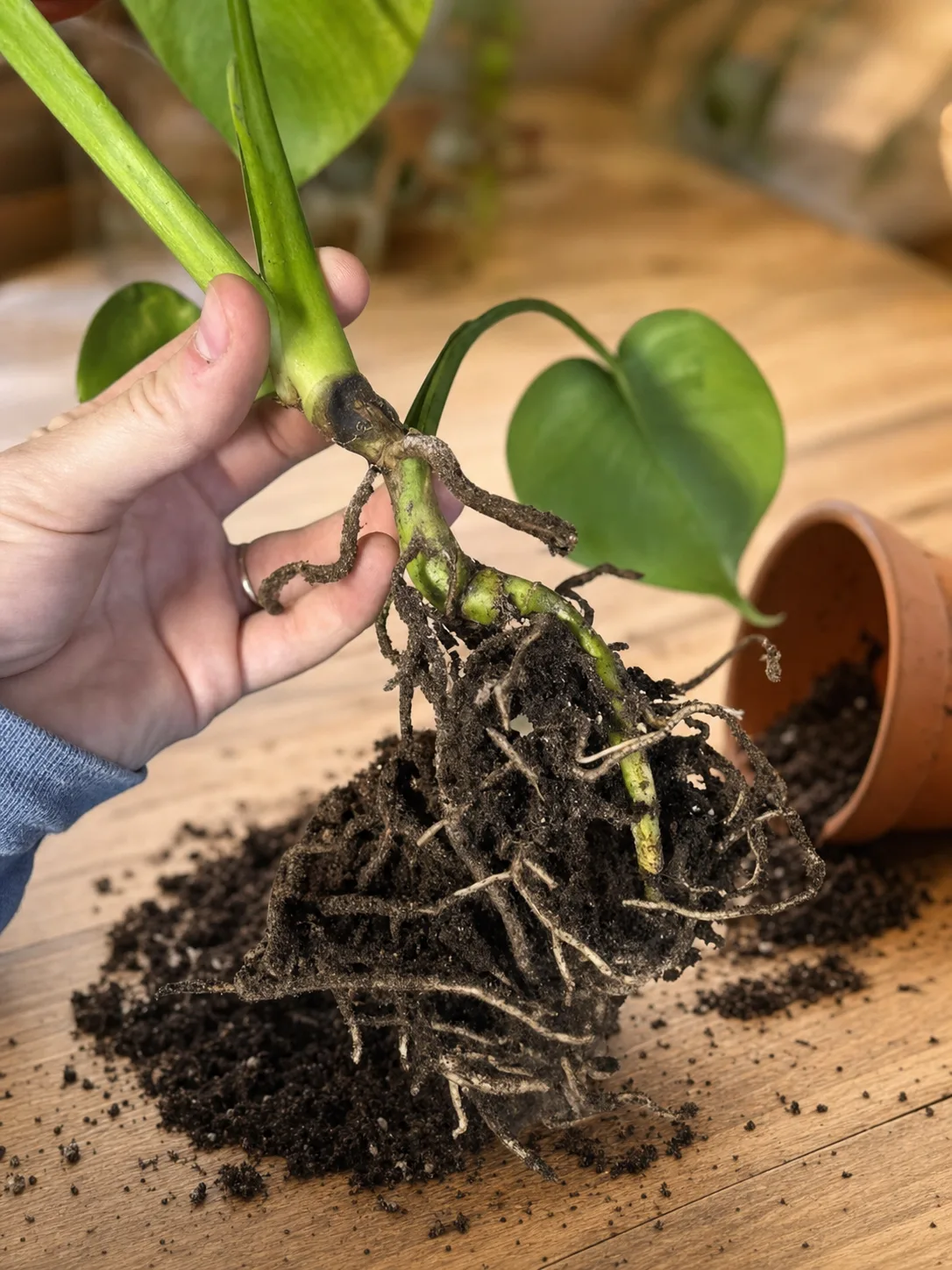
You don't want to dig her up to check. So you wait, and worry, and water anyway.

Tiny webs, sticky spots, little white specks. You don't know what it is or how urgent it is.
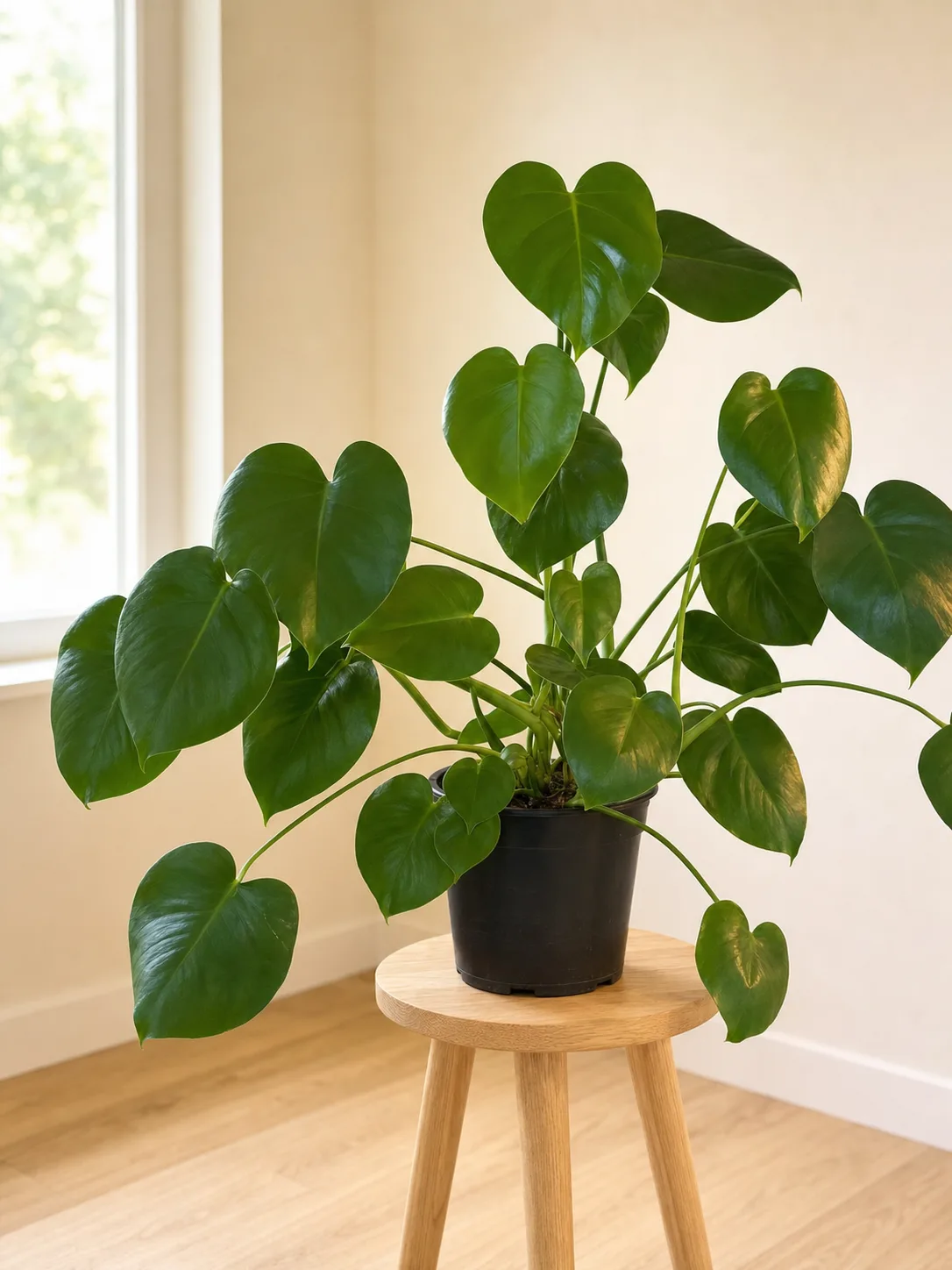
Months go by. She isn't dying, but she isn't growing either, and nobody explains why.
You don't need more opinions. You need to know what you're looking at.
Twenty-nine pages, in the order you actually need them. The essentials that keep her healthy, the twelve problems that really do kill Monsteras, each one with the same four steps, and the weekly check that catches them before they start.
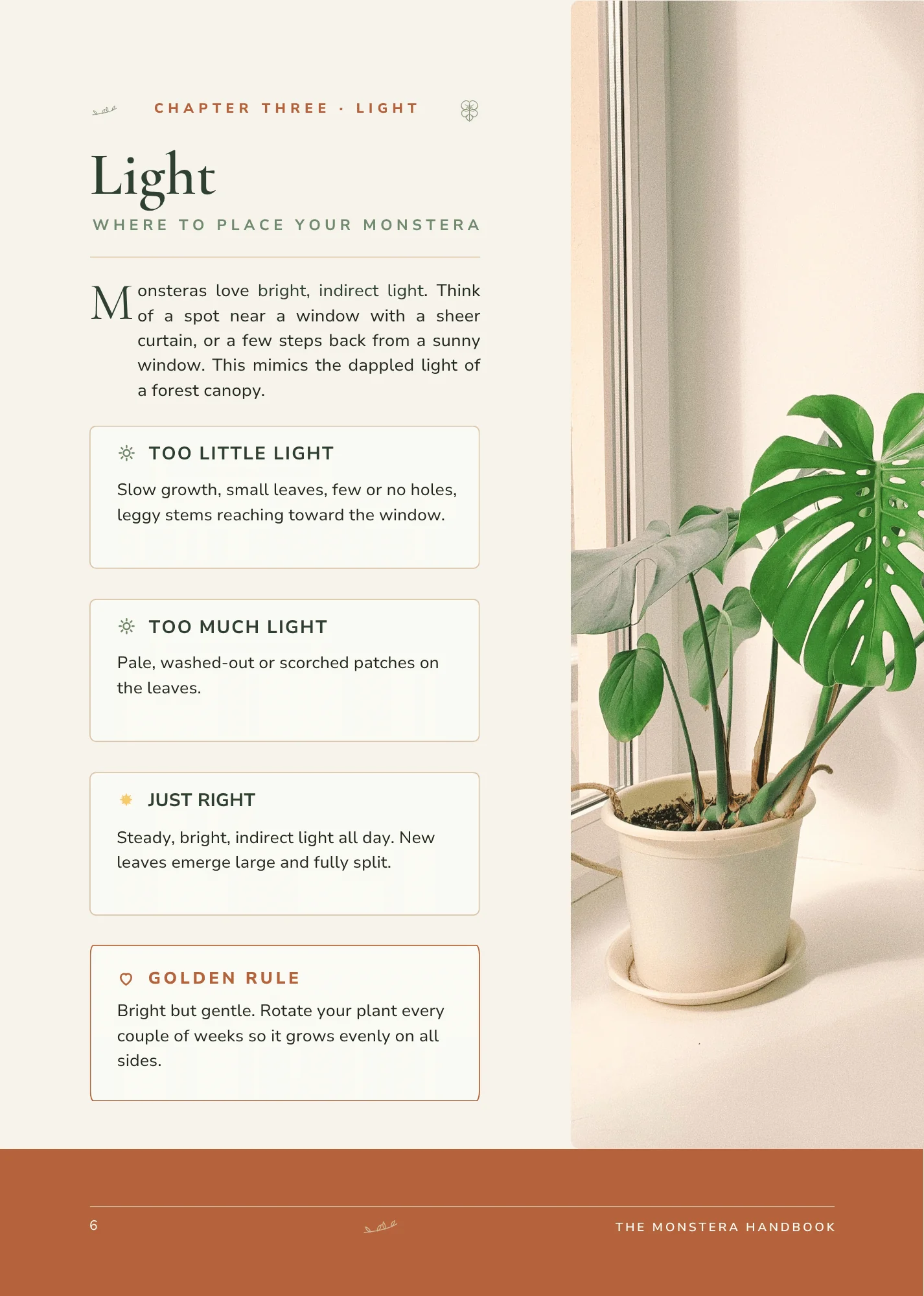
Too little light, too much, and what 'just right' actually looks like on a Monstera. The chapter that decides whether her new leaves come out big and split, or small and plain.
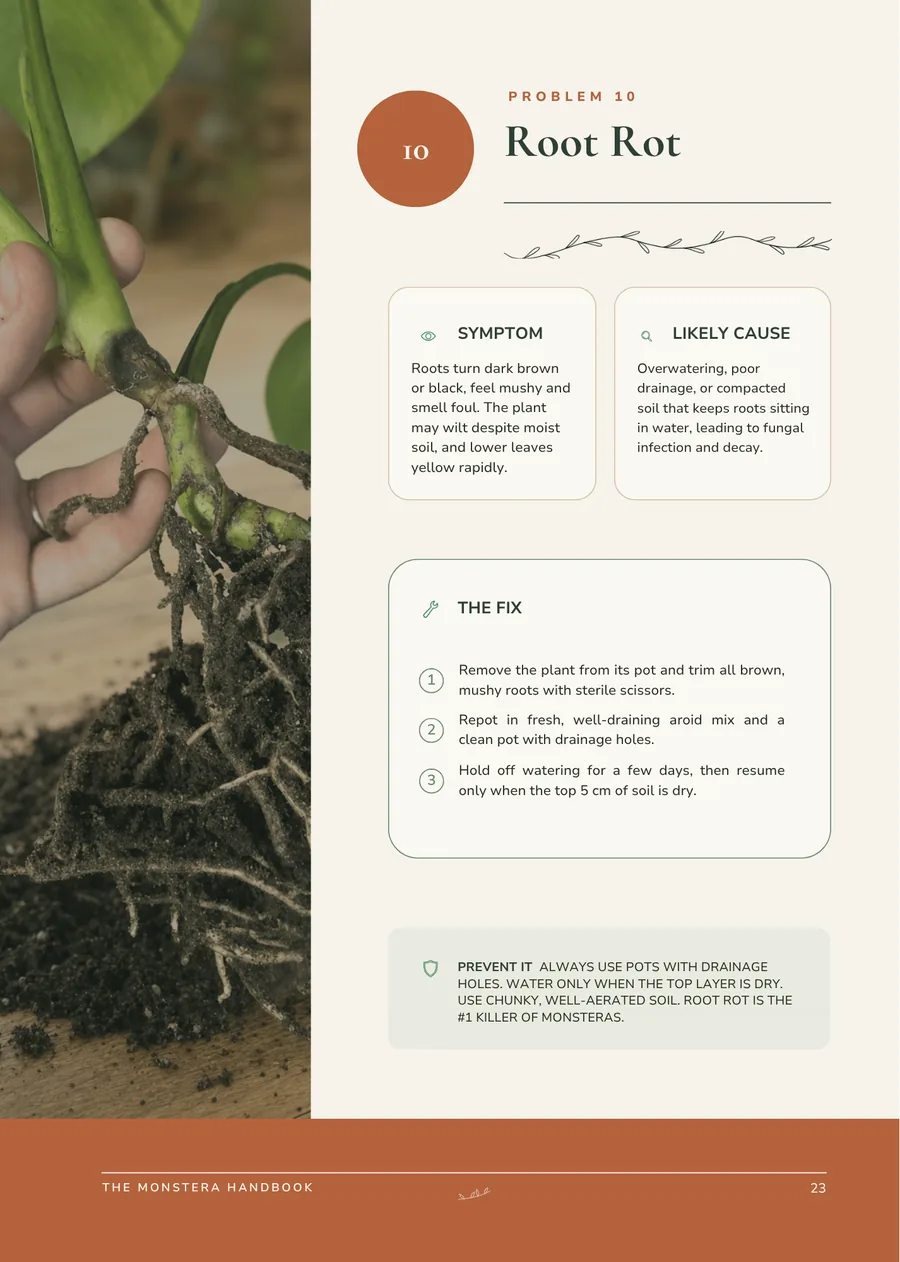
Root rot is the number one killer of Monsteras, and the reason most people wait too long is that digging her up feels worse than hoping. Three steps to fix it, and the one habit that stops it happening again.
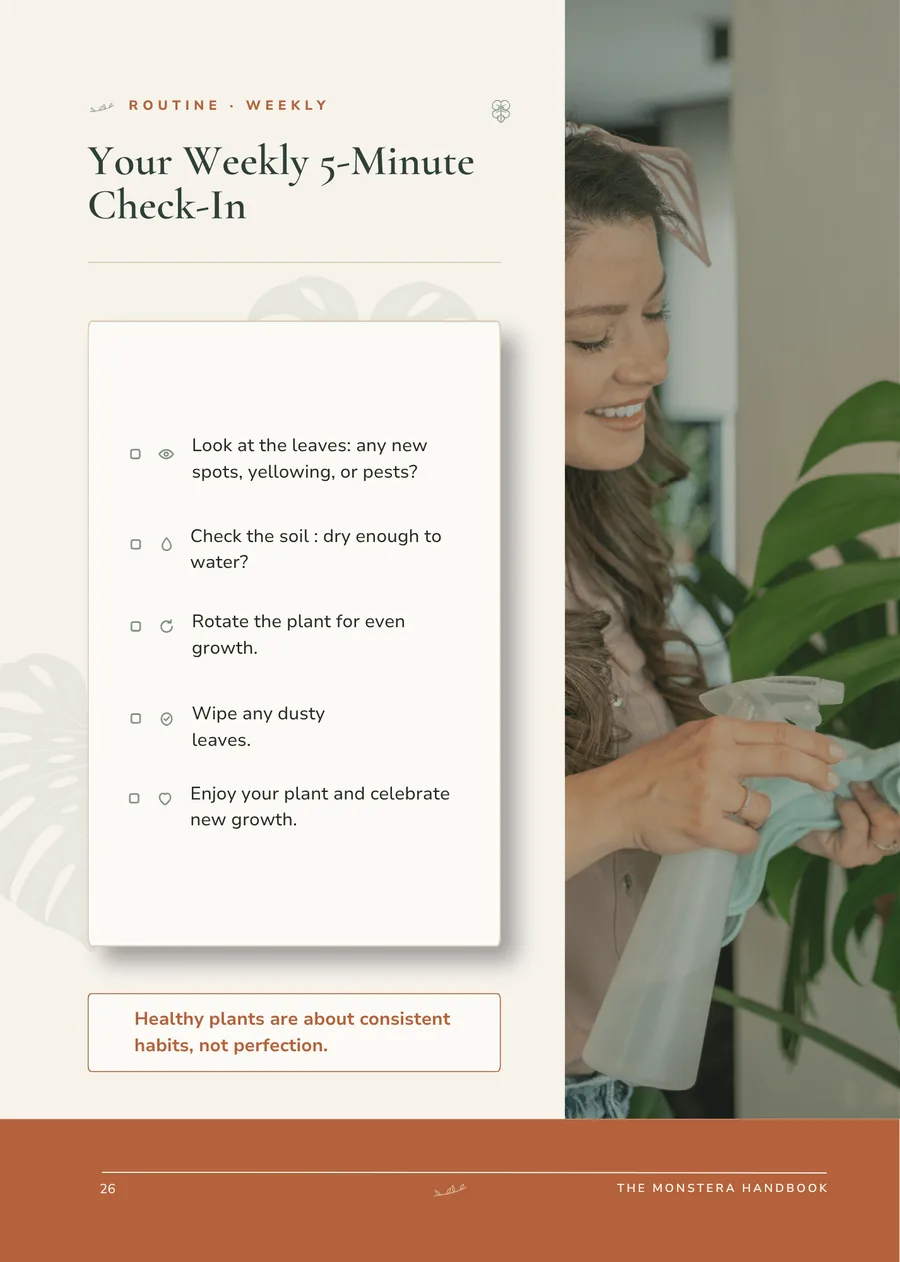
Leaves, soil, rotation, dust. The check-in that catches every problem in this book weeks before it becomes one, and takes less time than watering.
Twenty-nine pages. Nothing you have to translate.
Before you can help her, you have to know what you're looking at. That's what the Symptom Decoder is for. Three pages, built to be used standing in front of the plant: you look, you match what you see, you know where to start. Thirty seconds, and the panic is gone.
A yellow leaf isn't one problem. It's at least three, and they need opposite responses. The Decoder shows you how to tell them apart, plus four things that look alarming and are completely normal.
Stand in front of her for thirty seconds. Notice the leaf, the color, the pattern, where it starts.
Find what you're seeing on the page. Yellow at the base is not the same as yellow at the tip.
The page names it, tells you how urgent it is, and points you straight to the fix.
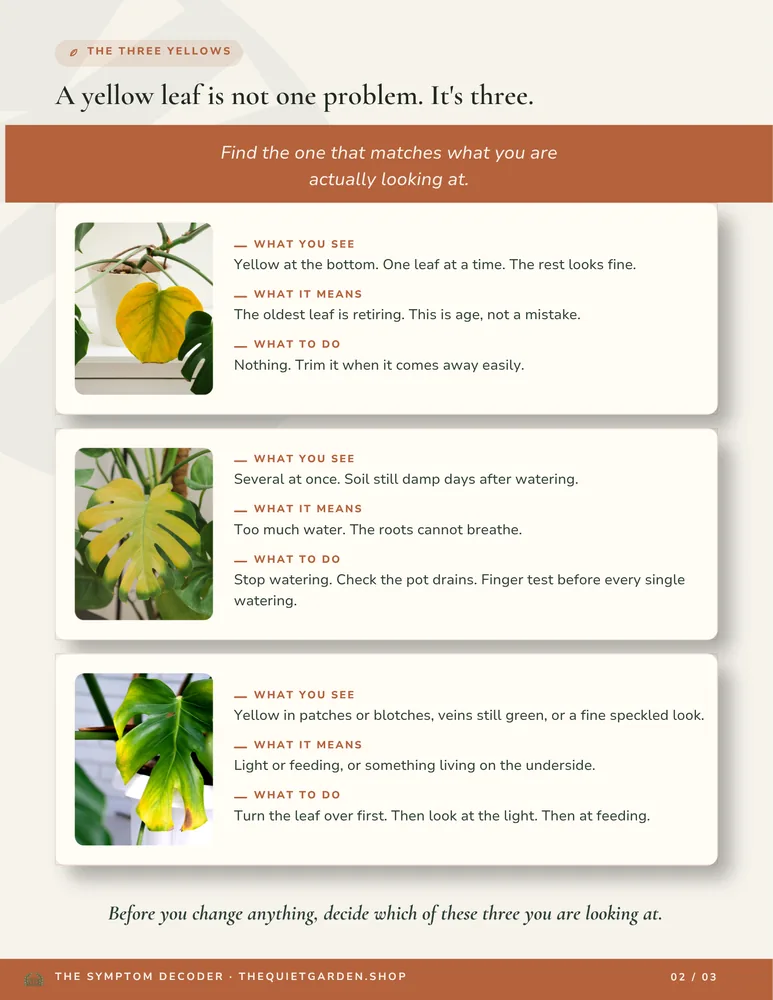
You describe what you're looking at. It tells you what it means.
The Monstera Care Calendar works in three moves: you look at her, you open the page for the season she's in, and you tick one row a month on the fridge. It works the same whether she's struggling today or perfectly fine and you simply want to keep her that way.
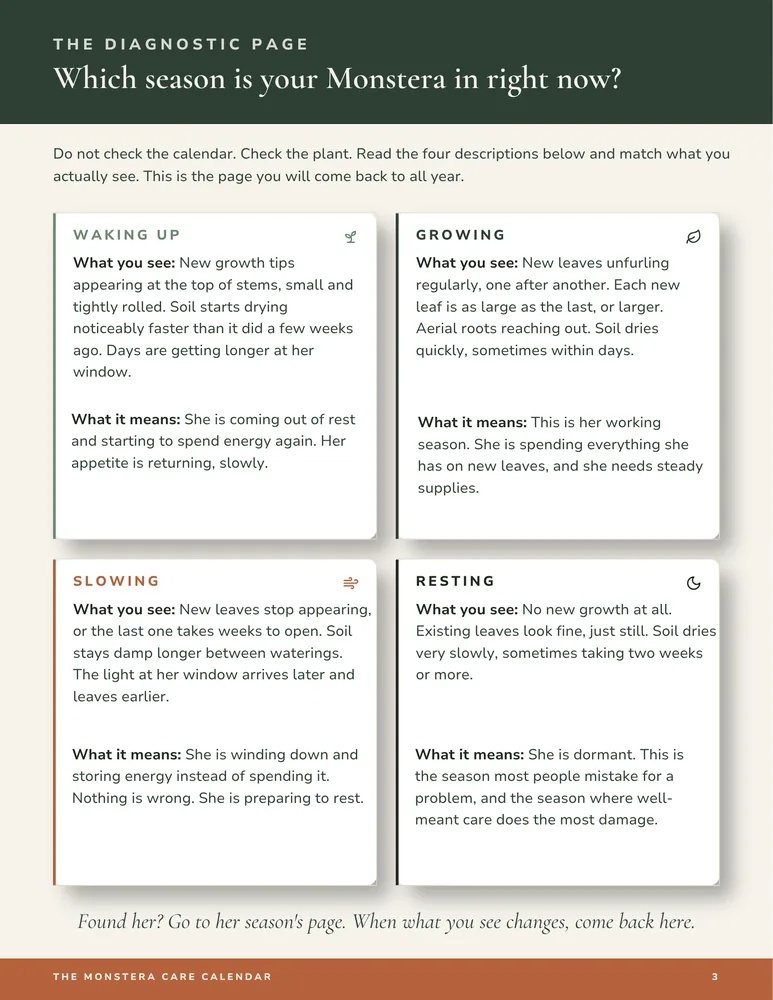
Start on the diagnostic page. Four short descriptions: Waking Up, Growing, Slowing, Resting. Don't check the calendar, check the plant, and match what you actually see.
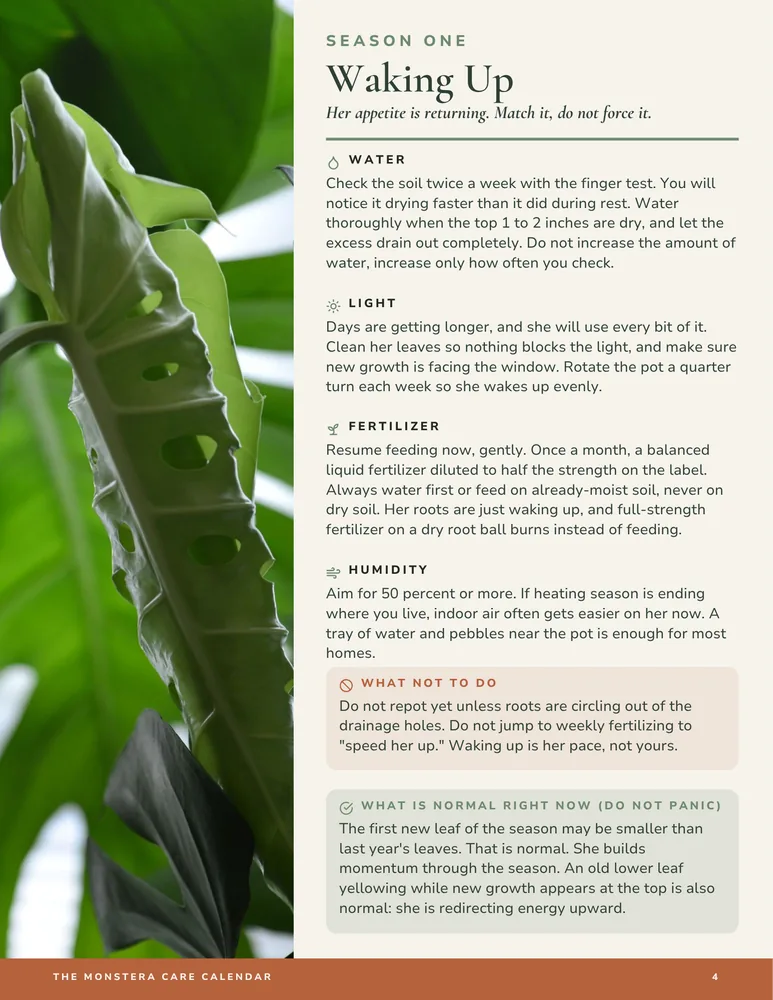
Water, light, fertilizer and humidity for that season, what not to do, and what's normal right now, so you don't panic over things that aren't problems.
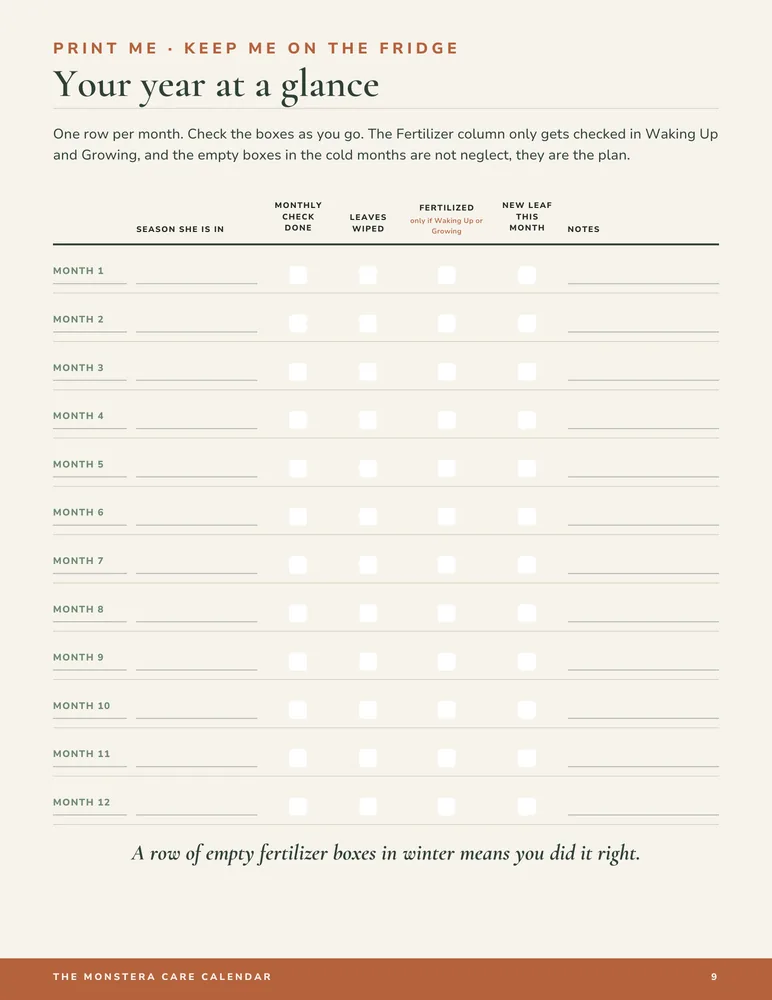
Print the year-at-a-glance tracker. One row per month, a few boxes to check. A row of empty fertilizer boxes in winter means you did it right.
Seasons don't follow the date on your phone. When what you see changes, go back to the diagnostic page and switch to her new season's page. Give her what her season asks for, and most problems simply stop starting.
Not a schedule to follow. A plant to read.
Three guides. 45 pages. Written and designed by me, yours to keep.
29 pages on the twelve problems that kill most Monsteras, and how to fix each one. Yellow leaves, brown edges, root rot, pests, stalled growth: what causes it, what to do this week, and what not to do in a panic.
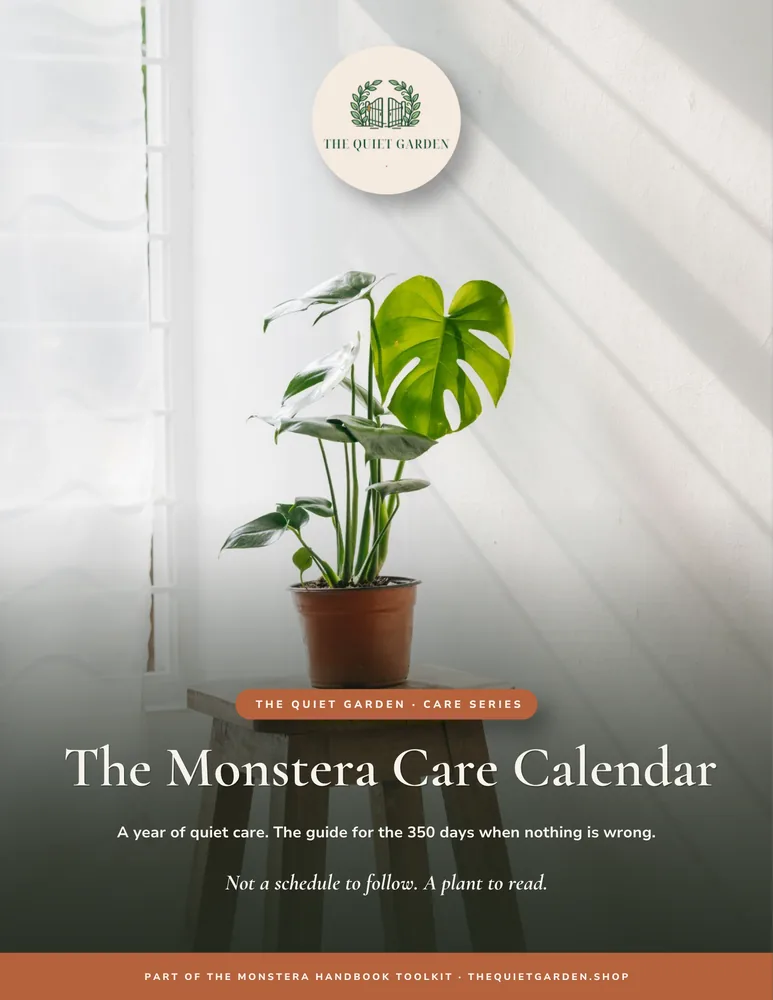
13 pages, the four-season method for the 350 days when nothing is wrong. Water, light, feeding and humidity for each of her seasons, plus what's normal right now so you don't panic. Printable, US Letter.
3 printable diagnosis pages: you describe what you're looking at, it tells you what it means. How to scan her in thirty seconds, why a yellow leaf is three different problems, and four things that look alarming and are not.
All three are printable. Stick them on the fridge, keep them by the watering can. No app. No subscription. No photos to upload. Just paper, if you want it to be.
Today: $24
✅ 30-day, no-questions-asked guarantee, if it doesn't make you more confident with your plant, reply to your receipt and I'll refund you.
📥 Instant download · Print at home · Yours forever · No subscription, ever.

Some moments don't happen at a desk. They happen standing over the plant, pot in one hand, phone in the other. These are 3 printable cheat sheets, sized for your phone: keep them on screen and scroll with a thumb while you work, or print them and keep them with your pots and soil.
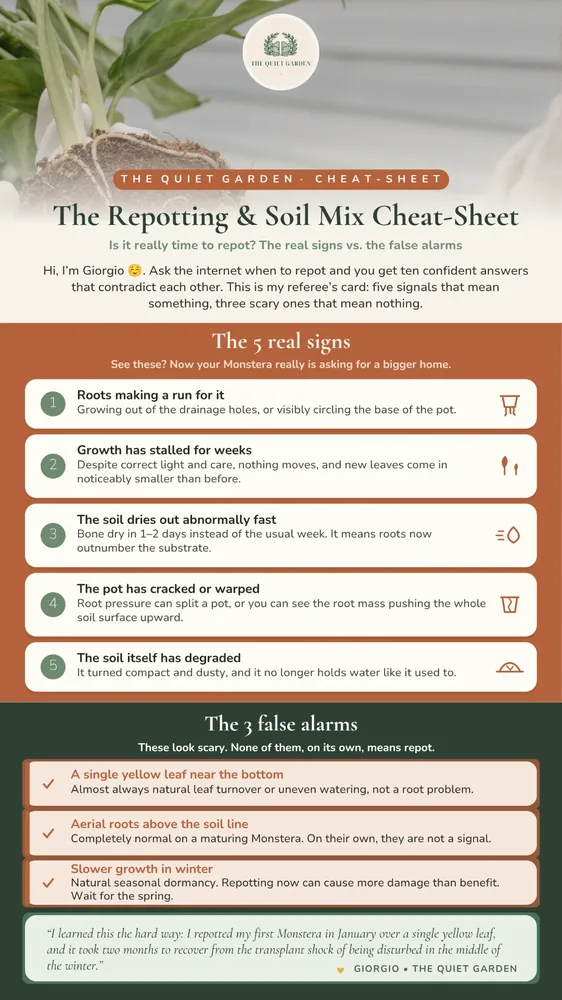
The 5 real signs it's time versus the 3 false alarms, plus the exact soil recipe, with what to buy and in what proportion.
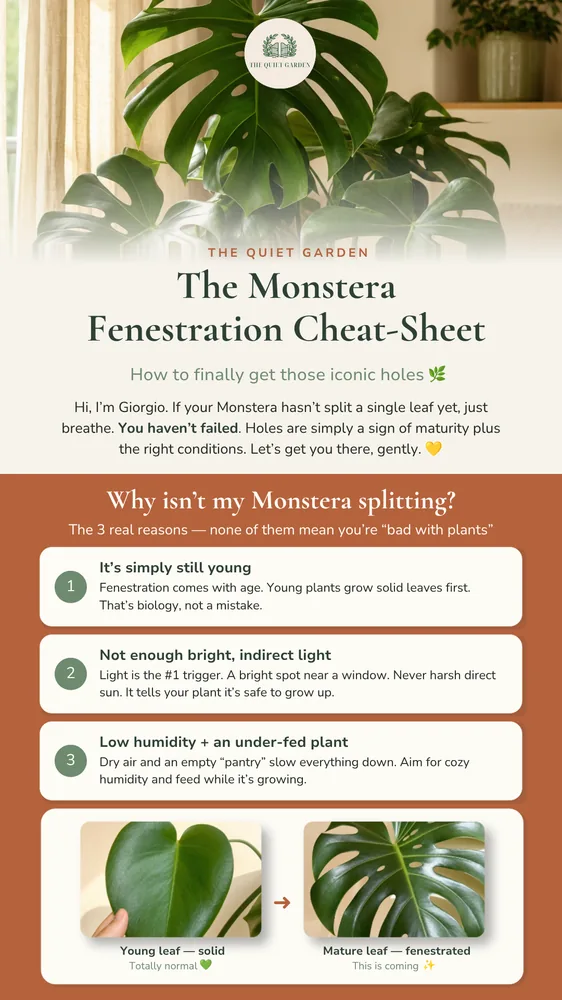
Why the leaves still haven't split, the reasons that have nothing to do with you being bad with plants, and how to get her there.
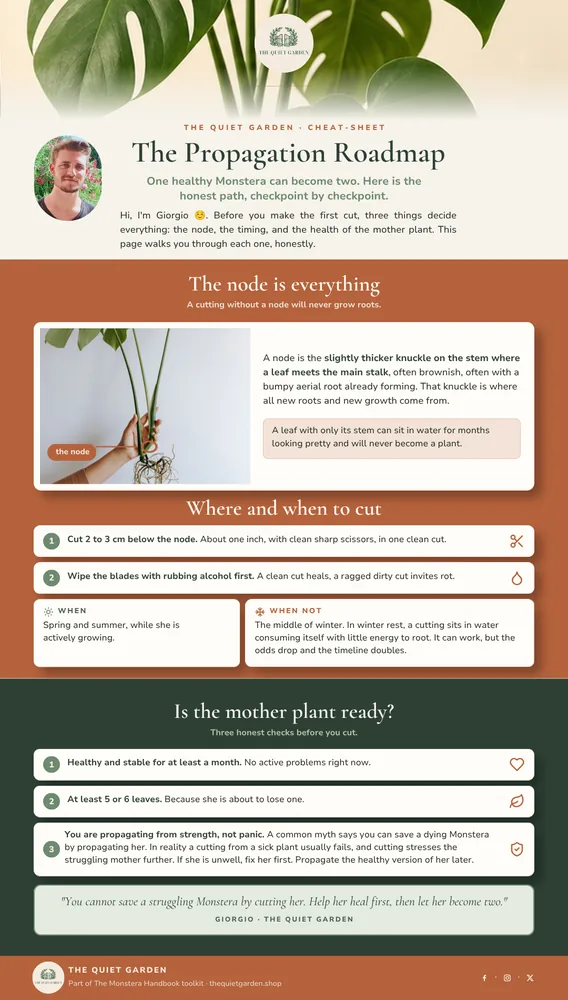
Turning one plant into two: where to cut, when not to, the checkpoints with real timelines, and real trouble versus false alarms.

I'm a garden designer from Tuscany, Italy, and the person behind The Quiet Garden. I've spent years learning plants the hands-on way, testing soils, killing a few cuttings of my own, and writing down what actually works.
Every page in this System is checked and signed off by me, a real grower you can reply to. No photo or image, on this site or in the guides, is made with AI. My promise is simple: no jargon, no guilt, no panic. Just calm, honest plant care.
Yes, that's exactly who I wrote it for. There's no jargon and nothing assumed. If you can look at your plant and describe what you see, you can use all three guides from day one.
Right after checkout your download is waiting on the thank-you page, and the same link arrives by email. Your guides come as a small zip file: on iPhone or iPad, tap it and it opens as a folder; on Android, tap it and choose Extract; on a computer, double-click it. No account, no app, and they're yours to keep.
Yes. The Handbook, the Care Calendar and the Symptom Decoder are all printable, in standard US Letter or A4. The 3 cheat sheets in the optional Troubleshooting Pack are printable too, and they're sized for your phone, so you can also keep them on screen and scroll with one hand while you work.
It's written and tuned specifically for Monstera. That said, the heart of the method, reading your plant instead of following a schedule, is how experienced growers care for every leafy houseplant. As Diane from Florida put it: it helped her "protect and manage my plants." Plural.
Neither, and it never will be. It's a set of beautifully designed PDFs you download once and keep forever. No login, no photos to upload, no renewal charging your card next year.
30-day money-back guarantee, no questions asked. Reply to your receipt and I'll refund you myself.
Three guides, 45 pages, and a plant that finally makes sense. Download them in a minute and go stand in front of her knowing what you're looking at.